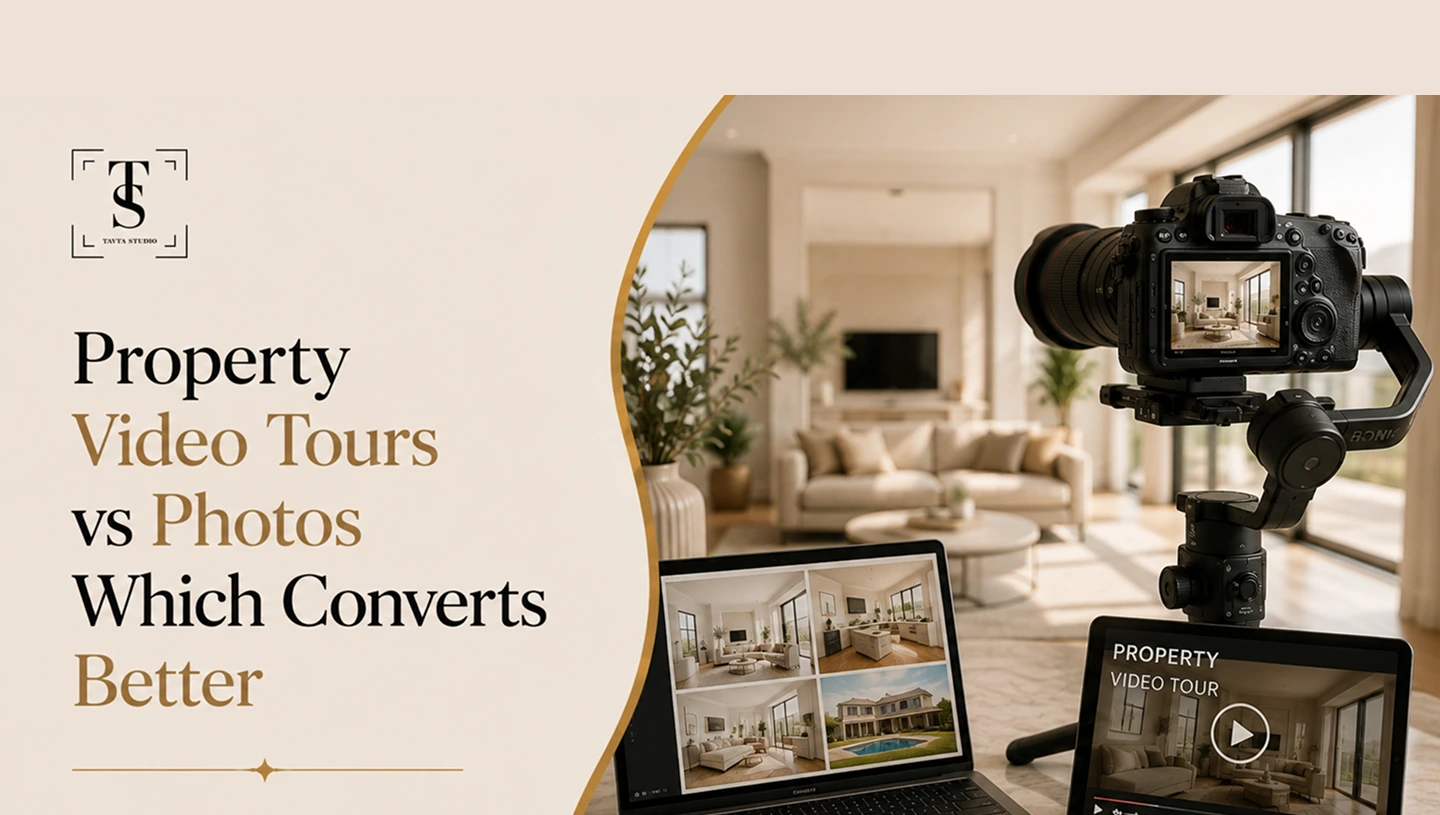
Property Video Tours vs Photos Which Converts Better
When people search for a property online, the first thing they usually notice is the visual content. High-quality property photography can show the design, space, and condition of a property, while a property video can give viewers a better sense of movement and layout.
This raises an important question for real estate businesses and property sellers: Are property videos more effective than photos, or do high-quality photographs still perform better?
The answer depends on the property, the audience, and where the content will be used. In many cases, the best approach is not to choose one over the other. Using both can give potential buyers a more complete view of the property.
Why Property Photos Still Matter
Photos are one of the most important parts of an online property listing. Buyers can quickly scroll through photographs and decide whether they want to learn more about a home, office, plot, or commercial property.
Good real estate pictures can highlight:
- Room layouts
- Interior design
- Exterior appearance
- Kitchen and bathroom details
- Balconies and outdoor areas
- Building features
- Natural light
- Landscaping
Photos are also easy to use across property websites, social media, brochures, advertisements, and listing platforms.
A strong set of photographs gives buyers a quick overview without requiring them to watch a full video.
The Growing Role of Property Video
A property video gives viewers something that a still image cannot provide — movement.
Instead of seeing individual rooms separately, viewers can follow the camera as it moves through the property. This can help them understand how different spaces connect with one another.
A property video can show:
- The entrance
- Movement between rooms
- Room size and layout
- Outdoor spaces
- Building surroundings
- Special features
- Overall atmosphere
This can be especially useful for larger homes, commercial properties, luxury properties, and spaces with interesting layouts.
Real Estate Videography Creates a Different Experience
Real estate videography is more than simply recording a property with a camera. The movement, camera angles, lighting, and order of shots all affect how the property is presented.
A professionally planned video can guide viewers through the property in a natural way.
For example, a video might begin with the exterior, move through the entrance, show the main living area, and then take viewers through the bedrooms, kitchen, and outdoor spaces.
This creates a viewing experience that feels closer to an actual property visit.
Property Videography for Better Property Presentation
Property videography can be particularly useful when a property has features that are difficult to explain through photographs alone.
A video can show:
- Large open spaces
- Long corridors
- Garden areas
- Swimming pools
- Office layouts
- Retail spaces
- Building entrances
- Views from balconies
Movement also helps viewers understand the scale and flow of a space.
However, video should not replace photographs completely. Buyers often want to go back and check a particular room or feature, and photographs make this easier.
Real Estate Reels Are Useful for Social Media
Short-form content has become an important part of property marketing. Real estate reels can turn a property into short, engaging content for platforms such as Instagram and Facebook.
A reel can focus on one particular feature instead of showing the entire property.
For example:
- “Modern kitchen tour”
- “Luxury bedroom walkthrough”
- “3 features of this property”
- “Before and after renovation”
- “A quick tour of this new home”
Short videos can help property businesses reach people who may not actively be searching for a property but may become interested after seeing an attractive reel.
What Makes Listing Photos Important
Listing photos are often the first visual information a buyer sees on a property portal or website.
This makes the first few photographs particularly important.
A strong property listing should include images that clearly show:
- Front exterior
- Living room
- Bedrooms
- Kitchen
- Bathrooms
- Outdoor areas
- Important amenities
The images should be bright, clear, and realistic. Avoiding excessive editing is also important because buyers should get an honest idea of the property.
When Photos May Work Better Than Video
Photos can be more useful when buyers need to quickly compare several properties.
For example, someone looking at ten homes may prefer to scroll through photographs first rather than watch ten separate videos.
Photos are also useful when:
- The property is small
- The layout is simple
- Buyers need to compare interiors
- The listing is being viewed on a slow connection
- Printed marketing material is required
- Specific details need to be examined
A high-quality photograph can communicate a lot in just a few seconds.
When Video Can Work Better
Video can have an advantage when the property has a strong sense of space or movement.
It may work particularly well for:
- Luxury homes
- Large villas
- Commercial buildings
- Offices
- Hotels
- Resorts
- New developments
- Properties with large outdoor areas
A video can help viewers understand the relationship between different areas of the property.
What About Land Photoshoot
Property marketing is not limited to completed buildings. Land and plots also need good visual presentation.
A land photoshoot can show:
- Plot boundaries
- Road access
- Surrounding areas
- Nearby buildings
- Landscape
- Location advantages
For larger land parcels, video can also be useful. A moving camera or aerial footage can provide a better idea of the surrounding area and the property’s position.
The choice between photos and video depends on the size of the land and what information potential buyers need.
Combining Photos and Video Gives Better Coverage
Instead of asking whether photos or videos are better, real estate businesses can consider what each format does best.
Photos are useful for:
- Quick property browsing
- Listing pages
- Detailed views
- Brochures
- Property comparisons
- Social media posts
Videos are useful for:
- Showing movement
- Explaining layouts
- Social media reels
- Virtual property tours
- Presenting the overall feel of a space
- Highlighting special features
Using both formats creates more complete property content.
How Good Visuals Can Support Real Estate Marketing
Real estate marketing has become highly visual. Buyers can discover properties through search engines, property websites, social media, advertisements, and real estate platforms.
This means businesses need photographs and videos that work across different channels.
A single property shoot can provide content for:
- Property listing pages
- YouTube
- Websites
- Digital advertisements
- Brochures
- Email campaigns
Planning the shoot around these different uses helps businesses get more value from their visual content.
Choosing the Right Photography and Video Team
The quality of the final content depends on more than the camera being used. Lighting, composition, camera movement, timing, and editing all have an impact.
A professional team can help decide:
- Which rooms should be photographed
- Which features need close-up images
- Where video movement will add value
- Which shots are suitable for social media
- How the property should be presented
- Which content is needed for different platforms
For real estate businesses, this planning can make the final property presentation more consistent and professional.
Why Use Both for Property Marketing
Photos and videos serve different purposes. One should not necessarily replace the other.
Photos allow potential buyers to quickly explore individual areas and return to specific details. Videos provide a wider experience and help viewers understand how the property looks and feels as they move through it.
Using both gives buyers more information before they decide to schedule a visit.
For a real estate business, this can also create more marketing content from one property shoot.
Conclusion
So, property video tours vs photos is not really a question of one being better than the other. Both formats have their own strengths.
High-quality real estate pictures are useful for listings, quick comparisons, detailed views, and printed materials. Videos and property videography can show movement, layout, and the overall experience of visiting a property.
For social media, real estate reels can bring additional attention to properties, while professional photographs can provide the detailed content buyers need when considering a listing.
The most effective property marketing strategy is often a combination of both. By using clear photographs and well-planned video content together, real estate businesses can present properties from different angles and give potential buyers more reasons to take the next step.
FAQ
Are property videos better than photos?
Not always. Photos are useful for quickly viewing property details, while videos help viewers understand the layout, movement, and overall feel of a property. Using both can provide better coverage.
Why are real estate pictures important?
Real estate pictures give potential buyers a quick look at rooms, interiors, exteriors, and important property features. They are also easy to use on listing websites, social media, and brochures.
What are the benefits of property video tours?
Property video tours can show the flow of a property, room connections, outdoor spaces, and special features. They can also be used for social media and digital marketing.
Are real estate reels useful for property marketing?
Yes. Real estate reels can present property highlights in a short and engaging format, making them useful for platforms such as Instagram and Facebook.
Should a real estate business use both photos and videos?
Yes. Photos are useful for detailed property listings and quick comparisons, while videos provide a more complete viewing experience. Combining both can give potential buyers more information before scheduling a visit.